
Have you ever had a quiet nudge from God but felt unsure about where it might lead?
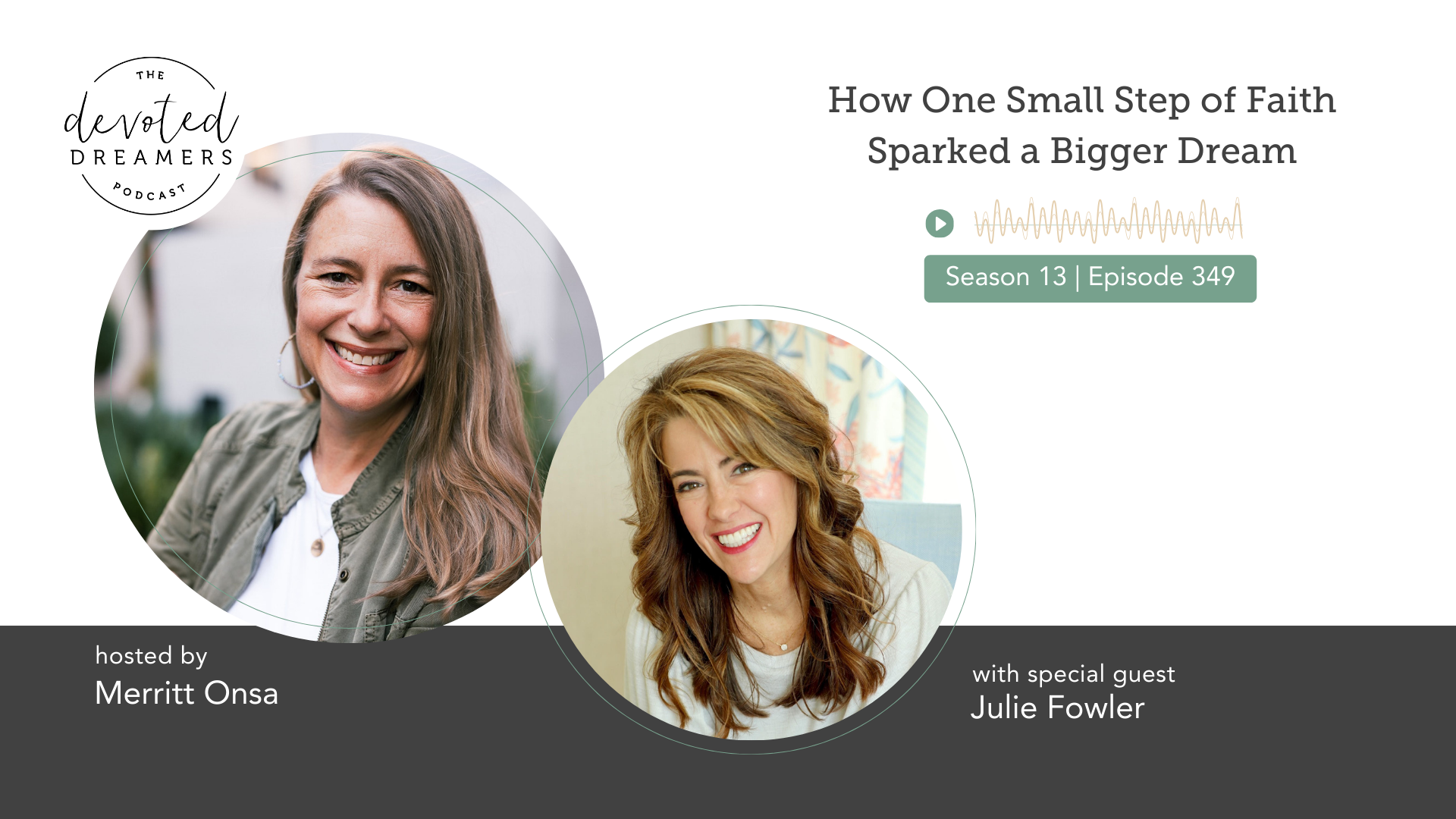
That’s where Julie Fowler found herself 25 years ago. In the middle of grief and loss, with more questions than answers, she said a simple yes to starting something she needed: a community of support and a space to hold the heartache of infertility, miscarriage, and infant loss.
IF YOU’VE EVER WONDERED IF GOD COULD REALLY USE THIS PART OF YOUR STORY, THIS IS THE EPISODE FOR YOU.
What began as a few women gathering at church has grown into a long-standing ministry that now supports couples across the country through biblical encouragement, small group resources, and compassionate leadership.
In this conversation, Julie and I talk about how God can use what feels like the most tender, painful part of our story and turn it into a source of hope and healing for others.
This episode will remind you:
✨ How God can transform your struggles into meaningful ministry
🤝 The value of inviting community and support into your dream
⏳ Why trusting God’s timing is key to growth, resilience, and lasting fruitfulness
You don’t have to have it all figured out to begin working on your dream. All you need is a small step of faith and the willingness to keep moving forward as you trust the Lord along the way.
Listen to Julie’s story for a boost of encouragement for your own calling, especially when the path feels long or uphill.
Then, download my 7-day devotional: 7 Truths to Silence the Voice of Self-Doubt, a short and powerful guide to help you remember what’s true so you can take the next step forward in your God-shaped dream.
CONNECT WITH MERRITT:
Website || Facebook || Instagram
CONNECT WITH JULIE FOWLER:
Website || Facebook || Instagram
MENTIONED IN THIS EPISODE:
Julie’s Books for Women:
Treasures in the Waiting: Finding God’s Comfort, Counsel, and Companionship Amid Infertility and Loss Treasures in the Waiting Leader Guide
For men:
Navigating Infertility and Loss with Strength and Hope; Men’s Bible Study
Navigating Infertility and Loss with Strength and Hope; Men’s Bible Study - Leader Guide
Scripture:
For to me, to live is Christ and to die is gain. If I am to go on living in the body, this will mean fruitful labor for me.
~ Philippians 1:21-22 (NIV)
Once when they had finished eating and drinking in Shiloh, Hannah stood up. Now Eli the priest was sitting on his chair by the doorpost of the Lord’s house. In her deep anguish Hannah prayed to the Lord, weeping bitterly. And she made a vow, saying, “Lord Almighty, if you will only look on your servant’s misery and remember me, and not forget your servant but give her a son, then I will give him to the Lord for all the days of his life, and no razor will ever be used on his head.”
As she kept on praying to the Lord, Eli observed her mouth. Hannah was praying in her heart, and her lips were moving but her voice was not heard. Eli thought she was drunk and said to her, “How long are you going to stay drunk? Put away your wine.”
“Not so, my lord,” Hannah replied, “I am a woman who is deeply troubled. I have not been drinking wine or beer; I was pouring out my soul to the Lord. Do not take your servant for a wicked woman; I have been praying here out of my great anguish and grief.”
Eli answered, “Go in peace, and may the God of Israel grant you what you have asked of him.”
She said, “May your servant find favor in your eyes.” Then she went her way and ate something, and her face was no longer downcast.
~ 1 Samuel 1:9-18 (NIV)
For we are God’s handiwork, created in Christ Jesus to do good works,
which God prepared in advance for us to do.
~ Ephesians 2:10 (NIV)
Enjoy This Episode? You might also like:
Ep 268: How Weakness Will Show Us the Way Back to Ourselves Apple | Spotify
Ep 283: Why Taking Action Is the Secret to Clarity for Your Dream Apple | Spotify
Ep 313: How to Feel More Capable When You’re Starting a Dream Apple | Spotify
PIN IT FOR LATER:
The unedited transcript for this episode of The Devoted Dreamers Podcast follows:
Hey dreamer. You're listening to episode 349 of the Devoted Dreamers podcast. Today we are talking all about how one small step of faith sparked a bigger dream.
Have you ever had a quiet nudge from God but felt unsure about where it might lead?
My guest today, Julie Fowler, knows that feeling well. 25 years ago, she started something she deeply needed in a season of grief and loss. Not because she had all the answers, but because she didn't want to walk through it alone. And she knew if she was struggling that there had to be others who were hurting too.
In this episode, Julie shares how a simple, faithful yes became the beginning of a ministry that's now served countless couples through church-based support groups, Bible studies and resources rooted in scripture.
What I love about Julie's story is that it didn't start with a grand vision or a polished plan. It started with presence, compassion, and a willingness to show up in the middle of the unknown.
If you've ever wondered how your own lived experience could become a source of hope for someone else, or how to take that first brave step without knowing where it's all going, Julie's story is full of encouragement and quiet wisdom.
Hey there. I'm your host, Merritt Onsa, a Christian life coach. I'm kind of like the Joanna Gaines for women of faith who have big dreams about how God might reorder the second half of your life so you can use your gifts and life experiences to usher in beauty, redemption, healing and service to others. It's not a redesign of your home that we're working on. It's a brand-new way to live in freedom.
Free from fear, free from second guessing yourself all the time, and free from the lies that the enemy has used to keep you quiet and playing small in the past.
Isn't it about time more of us who believe in Christ started living that way?
I'm on a mission to engage 10,000 women worldwide to start taking intentional and purposeful steps that will bring their God shaped dreams to life. If you believe in Jesus and you see his work in your life and you're aware that you've been given gifts, talents and a life story that could serve and benefit others, maybe you're among those 10,000.
I hope that you are, because you're here listening to a podcast about dreams. Maybe you're looking for a chance to see if your dream has legs. You want to try it on for size and figure out if it's possible. You want to be inspired and encouraged that there's hope for what you've been dreaming all these years. Maybe you've been too fearful in the past, or someone dashed your dreams with a comment that hit too close to home. Or you just haven't had time to figure out how to proceed.
Well, my friend, this is your time. This is your space. If you have big ideas for how God could use the gifts he's given you and the years of your life that remain, and you have a dream that would serve others, let's figure out how to turn that heartfelt hidden dream into real, actionable plans with impact for God's kingdom work in the world.
Before we jump into the interview, let's get to know Julie Fowler.
She's an author, speaker, pastoral care leader, and executive director of Julie Fowler Ministries, a 501c3 nonprofit organization. Through her years of infertility, failed adoptions, miscarriages and premature birth and loss of identical twins, Julie became devoted to helping women and couples find hope through the Scriptures and connection with others facing the same trials. She founded, wrote curriculum for, and led an infertility and miscarriage ministry for over 20 years.
Author of two Bible studies, Treasures in the Finding God's Comfort, Counsel and Companionship Amid Infertility and Loss, and A Husband's Study Navigating Infertility and Loss with Strength and Hope, Julie has spoken for MOPS International and the Nest and On the Don’t Mom Alone, Connected Families and Join the Journey Podcasts Julie helps churches and lay leaders start infertility ministries that share God's heart for the hurting.
She and her husband reside in Dallas, Texas and are the parents of three children.
Hey there, Julie Fowler. Welcome to the Devoted Dreamers podcast.
Julie Fowler:
Hi, Merritt. So glad to be here.
Merritt Onsa:
I'm thrilled that we get to talk today.
Let's start with talking about your God-shaped dream. How would you describe what God has put on your heart?
Julie Fowler:
Well, my heart is to help lay leaders and church leaders launch infertility and miscarriage ministries that will encourage and equip and comfort couples that are going through infertility and loss. Because that was part of my story. And ultimately my goal is to help people know Jesus, have a relationship with him, and fall in love with his word. Because there's so much in the Bible that relates to us and our stories.
Merritt Onsa:
Yes. And this has been, I want to say a long road, but maybe that's not the right way to put it. You've been doing this for a long time, right?
Julie Fowler:
Yeah. Actually, this summer was kind of the start of—and I'm kind of in the middle of still celebrating—25 years of ministry.
Merritt Onsa:
Isn't that amazing? 25 years.
Julie Fowler:
I know. I don't feel, don't feel old enough to say that, but that's the reality.
Merritt Onsa:
You don't look old enough to say that.
Julie Fowler:
That's where we are.
Merritt Onsa:
Yeah. So this is then kind of a unique conversation compared to a lot of guests that I bring on the show who maybe are two to five years into the dream that they've been pursuing. And I want to go back a little bit to what prompted this dream to even come to pass. And I know your story is much longer than we'll be able to cover the whole thing here, but will you take us back to 25-ish years ago?
Julie Fowler:
Yeah. And, and I think, yeah, since my story is kind of two parts, because I have, I have the older dream, you know, like what I started 25 years ago. And then there's a more recent current thing that I can kind of talk about too, but.
Merritt Onsa:
Great.
Julie Fowler:
Back a long time ago…
Merritt:
back in the olden days, as my daughter would say,
Julie:
Once upon a time. No, no. But when my husband and I had been, in early years of our marriage, when we wanted to start our family, it was, we had a really hard time. We had a really hard time having babies, keeping babies and growing our family.
And so I had a couple miscarriages early on and, and it was really, really painful. Really hard. And I had been a believer since I trusted in Christ when I was six. My dad led me to Christ. And I had the opportunity to be mentored and discipled by a lot of people through the years, even though as an army kid, I moved around a lot. God just put people in in my path to disciple me.
But I will tell you, this was the first infertility and loss was the first major storm I came up against. And so it really made me dig deep into what I believed. And I asked some really hard questions. Does prayer matter, if God is going to do what he's going to do anyway? What's my purpose? Because I always wanted to be a mom. That's just now I was a speech therapist, but my goal was to be a mom. And that's what I had always, always wanted to be.
My friends, we were all trying to grow our families at the same time, a lot of us who had gotten married around the same time. So I was really wrestling with relationships. I was wrestling with some of these deep spiritual questions, and, like I said, my purpose and identity. And so I thought, if I'm wrestling and I do have a relationship with the Lord, there's got to be more people out there that are also wrestling, and both believers and non-believers.
And I also always had a heart for evangelism since I was really young. So I was kind of writing little Bible studies even as a young person. And so I had a moment, really, actually, one summer where I realized I was sitting out and kind of stuck in victim mode.
And it's funny how God works where a lot of times, if God's impressing something on you, you kind of hear it in a lot of different ways from a lot of different people. And so at that time, I heard a sermon and I heard a song on the radio called “I Hope You Dance” by Leanne Womack, shout out for country music. And then I also, at the same time, came across Philippians 1:21-22 in my Bible, where Paul says, for me to live as Christ and to die is gain. If I am to go on living, it will be fruitful labor for me.
And I was very challenged in that. I thought, God, you want me to be fruitful? Like, if I'm to go on living this month, this next summer, this year, I'm to be fruitful. And so that's got to have more meaning than having kids.
And so I thought, God, what do you want me to do? And so as I sat still with my journal and really prayed through that, and like I said, I had those other inputs of a sermon and song of, like, I really don't want to be sitting out. I don't want to be missing out. I want to dance, and I want to be fruitful.
And God laid it on my heart to start a ministry so that we could mutually encourage each other. We could mutually equip each other and draw closer to the Lord instead of either being stuck in victim mode or pulling further away, you know, or feeling like God is either not caring or not hearing, not seeing us when I knew. I knew he was. But a lot of times it doesn't feel like it when you're in the midst of a storm.
Merritt Onsa:
Oh, for sure.
And so you decided to dance and be fruitful in the midst of. I think storm is a good word for that. How did you come to, like, how did the ministry begin? Was that by, like, inviting other people into these conversations?
Julie Fowler:
Well, I did go to… I went to my church, and my church was fairly new in our area. And so I just said, hey, I feel led to. I'm dealing with this, and I'm surrounded by all these women who are having babies. And so I have a heart to start something for people like me, and I would love to. Can I start it? And so actually, I was kind of one of the first ones at our church to start something like this. And so they gave me kind of a big old packet to fill out. But, I mean, I was all about it.
So I. And it's. It is kind of neat. Just. Our church was about four things: Believe, belong, be trained, be strong. And I was like, that's exactly what I want for this ministry. It's a particular niche, kind of for people who are dealing with loss and infertility.
But it's the same thing that we're all about, and it's so that we will believe and know what we believe and why we believe it, and that we would belong and have community. So I really wanted. I wanted community for myself because, like I said, my friends were all moving on, growing their families. So I wanted community, additional community for people who understood and were in the same boat as me. And then to be trained to be fruitful, like, let's be on mission together and then be strong. To be strong doing that. Be strong in ministry, because we know what we're about. We're on mission, and we're equipped.
So that really helped me. And I also knew there were other support groups and ministries around, around the country, but also around. I'm in Dallas, so even around the city that were just, you know, come and dump. So they were just occasional. You might come, you might not come. It was just a drop in, or there might be a secular one, like at a, at a hospital or something. And I was like, no, I want this to be community where we know each other, like a kind of a closed group kind of situation, and also where we're not going to just come away feeling worse than we did.
So I really wanted it to be not just to come and share or come and dump, but also come and share and be who you are and then. But then also be able to come away different.
And so my, my example really in Scripture is, is comes from the story of Hannah because Hannah went to worship in Shiloh in the midst of her waiting, longing and total grief. It's really neat if you look for all the words in 1 Samuel chapter 1 about how emotional she was.
And I just think it's really sweet that God puts chapters like that in the Bible because he could have, he could have just started with Samuel's story because Samuel is the prophet and priest and it's really, it's called for Samuel, so it's really about him. But the fact that he put in the Bible the story of Hannah, the mom, and about her longing and her deep, deep grief, to me is so important for us to know.
And it's so sweet that he would include that. So I love that she went to Shiloh to worship and she just was so raw and so real with the Lord. And in fact, you know, if, for those who know the story, Eli the priest is watching and he thinks she's drunk because she's just moving her mouth and she's crying out to the Lord. But then after she does that, she comes away from that time and she eats. Her face is no longer downcast. And that was my heart for the ministry, was that we can come and be real. But then when we come away, even without any circumstances changing, we're going to look different because we've had a place where we can just be real with the Lord.
So that was kind of the impetus for what I wanted to kind of start and create and set up for other people.
Merritt Onsa:
Yeah. And as you're talking, it makes me think about how often the thing that we feel so passionate about, that we want to invest our days, our hours in, is based on our own experience. So you said, I want community to walk through this season. I have no idea how long I'm going to be here, and I don't want to go alone.
And so you built something that would do that, not just for you, but expand that to others. And that's so beautiful.
And now, 25 years later, can you give us a little high level of, like, what's this turned into?
Julie Fowler:
Yeah. So I started with just a small group, and really, actually, not many people from my own church came, which was surprising, but it was word of mouth that people came, and we did a small group. And then really, for the last 25 years, we've done these groups, you know, twice a year. A Bible study that I wrote, so I wrote the curriculum for it. And then in between semesters, we would still meet. And so we were doing that at our church. And then other churches would sometimes say, hey, we want to do that curriculum. Or maybe someone would do the study with us and then move and. Or tell a friend. You know, it was kind of word of mouth. And so I was helping other churches get going and kind of unintentionally, kind of got into the shipping business eventually, where I would ship out some books and things like that. But it was kind of not really a polished. It was bound, and it was still the curriculum. But it. I knew it was going to need another step at some point. So I knew that if.
Or maybe it was a dream. I mean, I kind of felt like it needed to be done, but it also seemed impossible. So. But I knew that if I really wanted other people and other churches to really get going and use this as on an ongoing basis, I needed to make it better. It needed to be more professionally done. And I felt like there were certain parts of it that seemed like the biggest hurdles. And it kind of was. I used the term kryptonite.
I'm glad the movie Superman just came out because I've used the term kryptonite for so long. And, well, unless you've seen the movie, you don't know, kryptonite is what makes Superman weak. Right. He's, like, allergic to kryptonite. It makes him absolutely dysfunctional. Well, there were some parts of this curriculum that were like kryptonite to me. I was like, I just don't even know what to do with it to. If I were to publish it. There were just some things about it that were complicated. And so it was just one of those things that I was putting off and putting off and putting off and putting off until I didn't
Merritt Onsa:
Yeah, so. So the Bible studies, you have men's and women's.
Julie Fowler:
Right. But usually this is another, you know, kind of, I think, thing that we all have to deal with is sometimes we want something to happen, you know, whenever we think of it, and it's just not the time. And so I really. A lot of us thought we needed. Because I did get to build a team over time, and a lot of us thought that we needed a men’s study, but there was not a male leader that was really coming forward. So it wasn't until 2018, which in my mind is pretty recent, because out of 25 years, like 2018 is pretty recent, that we developed a men's study. And so it had some male leaders.
And then. Yeah, that was. So that was another kind of product or resource that would have needed to be revised and made available to other churches if I wanted to really continue helping other churches have this.
Merritt Onsa:
Yeah, And. And that is what you're doing today. Right? Okay.
Julie Fowler:
Yeah. So I just. I kept. I kept at this crossroads. I was really at a crossroads where I could, because my church for a while was helping me communicate with other churches because our church does send out other resources. So my church was helping send out mine. But then they decided that they were going to focus on some of the big ones and not some of the smaller ones. And so they gave me the opportunity to.
They said, well, if you want us to, we can eventually, you know, take yours and we'll do all the work on it and help you with it, but it'll be a little while and it would be ours or—which would be fabulous. I mean, they do everything so beautifully. Or you can keep it. We'll still use it. You know, we still want to use your resource if you want to keep it, and then you do it yourself. And so with some prayer and things like that.
And there were some bumps in the road when I thought I was going to go forward. And I stopped. And, you know, it was some stops and starts, but ultimately I did decide, I think that I would like it to be my story. I would like to steward my story, whereas if my church takes it, it will be more generic. And I knew how passionate I was about certain aspects of the study and the feedback I'd gotten through all of these years. And I was a little afraid of losing the say so in all of that, which I would have, you know, and so I decided to keep it. And so with that. That required a lot of time, a lot of financial investment on my part and a lot of insecure, you know, just me having to learn things as opposed to if my church had just done it. I mean, they've got the graphic designers, they've got the editors, they've got, you know, they've got the people. And so it was. It definitely was different doing it by myself, but I did get some counsel and felt like this was the right decision. And it might have taken in some ways longer, but I feel really excited about it.
Merritt Onsa:
I bet you've learned a ton along the way.
Julie Fowler:
Continue continuing to learn so many of the pieces. Yes.
Merritt Onsa [00:17:07]:
Well, and that's a good transition, because I want to ask you, like, as you're looking back, and, um, maybe this is about the original ministry. Maybe this. Your answer is about kind of more current day. Um, but what would you say are. Or maybe one of the biggest challenges that you've had to overcome to continue to move forward with this?
Julie Fowler:
As far as the ministry going, I think for a while when I was starting this, I really felt like, you know, I'm gifted in certain ways and not in other ways. And when I was asking for help, because I did need help, for a while, I just felt like I was asking everybody favors, and I felt like I was imposing on people.
And then I learned the phrase bless them by asking. And that really did change my mentality, and it changed the way I look of I'm inviting people to be a part of something that can change lives, can share the gospel. It's an invitation for other people to use their gifts and be a part of something.
Or if someone is in the midst of the same struggle of infertility and loss, it's a chance for them to let God use their story and steward their story. And so it changed when I had the mindset of I can bless them by asking and I can invite them in to take a part, and they can also say no, which is so fine. But the blessing is just. I'm just. It's just an invitation. And so that helped a lot. And as I did that and then had a team and then gave people ownership, like, this is your role. This is your role, number one, I didn't have to do everything myself, and especially the things that I wasn't great at. And then also it gave me a team. So that I had some community and that, that helped a ton. And that's been for the ministry and then also for the writing project and developing the nonprofit so that I'm not the only one doing this. And I. I've learned too that I'm somebody who, I need people around me I love.
I need people around me to share ideas and I need people around me to cheer me on and encourage me because some days I'm like confident and doing great and other days I'm starting a second guess or that insecurity can sneak in. So that's what I mean. That's one thing I love about what you do in Devoted Dreamers and why I've jumped in there because I like having other people to where we can say, you know, you're not crazy and you're doing a great job and hey, I need help with this and ask the questions. So having other people around to pick up where I just am at a loss. Or maybe I'm just. Maybe I've just got that brain. What do writers call it? Brain. Kind of like writer's block. Yeah.
Merritt Onsa:
Brain fog.
Julie Fowler:
Yeah, Brain fog. It's that too. So all those things. So I think just. Yeah. And then the loneliness and so. And I've realized too, with this, that. And you know, again, it just depends on how you're wired.
But I am so energized when I get around my team or our. It's now our team. I'm actually now a volunteer on the team. It's not even my team anymore. But when I go and I'm around other women who get it and we have the same story and we've seen the fruit of the ministry together and we're so for it and we believe in it. I just come away so supercharged. So that's one thing that I realized if I'm hitting a slump. Okay, Julie, get with your people.
Like whether it's a text or a lunch or a meeting, like get or on Zoom now. I mean, how blessed are we that we can have Zoom now and get with. Get with some people so that you. Because you're not doing alone. So. Yeah, that's like one of the things. Yeah.
Merritt Onsa:
Yes. I feel like there's a collective sigh of relief that, you know, in the audience, like, we need each other. We were not meant to do these very challenging big things all alone. So I love that you're surrounded with people and I guess that speaks a lot to the 25 years too. Like.
Julie Fowler:
Yeah. And I think that's one thing that was kind of different about this ministry was it was only lay led. So, you know, I was never on staff. Our team was never on staff. Now we did have a pastoral care leader over us and we had an admin under her that would, you know, we always were interfacing with the church, but we weren't at the church and so we weren't going to the staff meetings. And so that was one of the things that I thought, oh, we don't have that collaboration and that synergy and, or maybe even the download together like you might do if you're on staff.
And so I was trying to tap into both, how do I get the camaraderie and the synergy of that and how also do I get some of the training of that? So I've had to find some of those things on my own and I've been so thankful that God's provided them. So some of that's been leadership podcasts that I've looked that I've listened and learned a lot from.
Julie Fowler:
Some of it's been writers, cohorts or writers, either Facebook groups or listening to conferences, listening to podcasts, listening to your podcast. So those things have helped me go, okay, this is, this is what I might get if I was part of a community. I had to go find it and God brought it to pray, praying for it, waiting for it, looking for it, all those things.
Merritt Onsa:
Do you feel like you have a clear picture now in hindsight? Like what things you needed, in what order? Or was that just more like, I don't know, just God's gift that he gave you things when he did?
Julie Fowler:
Yeah, I think, I mean, it was really interesting when we did have someone over us at the church that I talked to and they said, Julie, you've got to get a team. Like, you can't be doing all this and you need to like give these ownership roles.
And so I think that if I did get that a little later, but it was like, when it came, it was awesome. So I do try to tell people, you know, you can start something, but just always be praying and looking for who you can bring along with you.
And I was also taught to be trying to replace yourself and so that if you believe in what you're doing, if you were to disappear tomorrow, would it go away or would someone, would it be carrying on? And so I think those two ideas helped me and I try to encourage people, hey, you can start this, but be praying that you have someone to come alongside you to co-lead with you or to be able to get feedback from and collaborate with. And I think if I had had that earlier on, it would have just been that much better.
But I did, you know, I started praying, and God brought me a co leader for the study, really, after the first group. And so that was really neat.
And especially, I think it depends on, I think the type of. Type of dream we're doing and the type of ministry we're doing. This one is pretty heavy. And I know a lot of people that you've had on your podcast, and a lot of people that I've met, they're stewarding kind of a hard story. And so then they're in that role of ministry. They're hearing other people's hard stories. And I think that's another reason why we need people.
Because I just remember the first study I led, and I was so excited to have people come because it took a year and a half to launch and do the curriculum and everything. So when they finally came to my door, and I'm thinking, oh, we're all in this boat.
Like, we're all dealing with this together. We're all in infertility or we're all in loss. So I was kind of excited. But they weren't. They were.
Merritt Onsa:
They were dreading it.
Julie Fowler:
They were dreading it, you know, because. And they weren't. It's the club nobody wants to be a part of. So then when they left and I was just by myself, I thought, oh, goodness, Like, I just wanted to be able to talk about it with someone. And so that was. That was where later on, having a co leader and having a team really helped.
Merritt Onsa:
Yeah. I mean, I think about, too, even the process of you writing that study, I think you just said 18 months. And then the people who came in the room, they're seeing it probably for the first time. And so even though there was similarities in your story, you had done all this work not to be ahead of them, but you were in a different place. And so, yeah, I can see how just a need to be fed and poured into as a leader, even though you're leading peers, basically. So.
Julie Fowler:
Right.
Merritt Onsa:
Yeah. And there was something else you and I talked about kind of offline that relates to this ministry being around for 25 years is, it's a whole different generation now of women that you're encountering and would love to hear how God has kind of helped you stay the course and not get either sidetracked or discouraged.
Julie Fowler:
Well, there's a few pieces to that. I realized that this issue of infertility and loss, it is a young person, generally speaking, it's. Young is relative, right? It's. It's a term that's relative. But, you know, we're thinking 20 to 45 is kind of the age range, and I'm not in that age range anymore. So I wondered if I was disqualified at this age, like, should I just move on? And I have had other storms that I could like, I could also like. And I hope that God does use me there, too. But I kind of wondered, should I move on from this or should I continue to speak into this, into this situation of infertility and loss? And so I really was wrestling with that for a while and praying about that.
And what's really neat is God kept bringing stories to me. And what really. So just to kind of put some pictures in people's mind, like, I was at a crawfish boil, which was super fun. But a girl, a friend of mine came up and said, oh, my goodness, I just met a woman who named her daughter after your ministry because it meant so much to her because she had been through infertility, and then when she finally had her baby, she named her daughter that. And I was like, oh, my goodness. And she named the person, and it wasn't someone that I had led personally, but had been, you know, had had another leader from our team lead her. And so that was an encouragement.
And then just not long after that, I was in the grocery store, and I realized I left my phone in the store somewhere. And I thought, oh, my goodness. I was like, it's next to the Hawaiian rolls. I know it. And so I start walking towards where I think it is, and I'm praying, of course, like, oh, Lord, please let my phone still be there. And as I'm walking to where I thought I left my phone, I hear, Will Julie Fowler please come to the customer service desk?
Merritt Onsa:
Oh, my gosh.
Julie Fowler:
And so I'm doing that walk of shame, walking up to the customer service. And the thing is, I left my phone somewhere else just a few days earlier. I was just like, Julie, really? Like, I cannot even believe I had done this again. So I'm walking up to customer service, and someone runs up and says, Are you Julie Fowler? Did you write that study on, you know, infertility and loss? Oh, my goodness. I named my dog after that study because it meant so much to me. So I Thought. I thought. And I just.
Julie Fowler:
And again, this was not someone I had personally led. But God used me losing my phone to have this person come up and say, I just want to tell you, it's been years. I now have, you know, two children that are this age and this age. But I just wanted to tell you that study really touched me and has continued. I still use it and go back to it in my life. And I just wanted to tell you that. And so it was just super sweet that. And, you know, we kind of laugh that, you know, it's a dog that was named after it.
But I thought there were things like that that God kept doing. And I thought, Lord, I feel like you're telling me it's worth the time. And those hurdles that I talked about that I was like, I don't know. I don't know what I'm going to do with this lesson. I don't know what I'm going to do with this lesson. And to format, it would just be like Mount Everest. Like, how would anyone ever format this? Because every lesson's different.
And I mean, God just. I just started, and each little hurdle, I just would go, okay, it's this next hurdle. God, I. Will you help me with this next part? This is the thing that I just do not know what to do with. And he would provide that next step. And that was over a year and a half of those, like, just taking a little hurdle at a time. Whereas before I had just looked at it and thought, I mean, this would just be. It would feel impossible.
Merritt Onsa:
Yeah. Well, I'm so glad that you didn't give up or give in to any discouragement or fear or the Mount Everest of work. We're gonna keep talking and do a part two on this one.
But before we wrap this one up, I would love for you to just give God the glory and summarize, like, how God has changed you by giving you this idea, this dream, from who you were before to who you are today. What's he done in you?
Julie Fowler:
A couple things, I would say, first thing is that it's not up to me. You know that Ephesians 2:10. We are God's masterpiece created for good works, which he prepared in advance for us to do.
And I think that, again, that I have seen God since he prepared the work in advance. He has brought the people to do the things that needed to happen and the timing that needed to happen. And so that has taught me Just because there's continues to be things like a podcast.
I mean, there continue to be different things of like, I don't know how to do this, or I don't know how to do this. That I have seen God provide what is needed to accomplish what he wants done to accomplish the good work in his time. And so that's the first thing.
And then the second thing is he like. And I knew this, I knew this going in, that I was. I was wanting to minister to others. I was wanting to bear fruit, but I knew I needed it too. We talked about that.
And so what I've seen is because I wanted to minister to others, I was having to dig deep myself. I was having to rely on Scripture, memorize scripture, look to God for the answers that I did not have.
And so it's made my roots go deeper as I've wanted to encourage others for their roots to go deeper. So it kind of has helped me to walk the walk as I'm trying to spur other people on.
And I think that's one thing that, you know, sometimes people will be like, well, what if I don't feel ready or I'm not mature enough, or I'm not. I don't know enough, or, you know, I think we wrestle with all those questions, but a lot of times by stepping out, if God's truly calling us, if we're stepping out, God is going to bring it, and then it makes us dependent and it makes us dig deep and rely on him, because otherwise we have nothing to give.
And so I think those two things is, I've been blessed by the depth of relationship and digging deep that I've had to do. And then I've also seen how faithful he is to provide and equip and fill in where all my weaknesses have been.
Merritt Onsa:
Ah, such beautiful insight about how God used the hardest parts of Julie's story, not after she was through it or had all the answers, but while she was still in the middle of it. I keep thinking about how her dream began from such a painful place. And yet the fruit has been a ministry of comfort to so many.
If Julie's story stirred something in you, maybe a desire to start your own ministry or to be more open about your experience, I'd love to hear what's on your heart. You can message me anytime over on Instagram. I'm @merrittjo or share this episode with a friend who needs the encouragement to keep going.
Next week we're continuing the conversation where Julie shares the nitty gritty of turning her calling into a published Bible study. Everything from navigating publishing options to using tools like ChatGPT and social media to help bring her dream to life.
Part two is full of practical steps, spiritual wisdom, and a reminder that your faithfulness matters even if the results don't look flashy. Stay tuned. You won't want to miss it.
Finally, Daughter of the King, you were made for a beautiful purpose. Your identity and security rest in him, as does your dream. Because the Lord is good and his ways are always good. No weapon formed against you will prosper because you belong to Him.
Until next week, stay faithful. Keep dreaming. And remember, trusting God with your next step doesn't mean it isn't going to be scary. It means taking the step anyway. That's what faith is.
You are welcome here among women, braving those scary steps in faith, knowing our dreams matter because they are his. Until next time, I'm Merritt Onsa, your dream coach and sister in Christ, walking by Faith with you in the dream.
Have a great week.
If you've ever wondered how your own lived experience could become a source of hope for someone else, or how to take that first brave step without knowing where it's all going, Julie's story is full of encouragement and quiet wisdom.
Hey there. I'm your host, Merritt Onsa, a Christian life coach. I'm kind of like the Joanna Gaines for women of faith who have big dreams about how God might reorder the second half of your life so you can use your gifts and life experiences to usher in beauty, redemption, healing and service to others. It's not a redesign of your home that we're working on. It's a brand-new way to live in freedom.
Free from fear, free from second guessing yourself all the time, and free from the lies that the enemy has used to keep you quiet and playing small in the past.
Isn't it about time more of us who believe in Christ started living that way?
I'm on a mission to engage 10,000 women worldwide to start taking intentional and purposeful steps that will bring their God shaped dreams to life. If you believe in Jesus and you see his work in your life and you're aware that you've been given gifts, talents and a life story that could serve and benefit others, maybe you're among those 10,000.
I hope that you are, because you're here listening to a podcast about dreams. Maybe you're looking for a chance to see if your dream has legs. You want to try it on for size and figure out if it's possible. You want to be inspired and encouraged that there's hope for what you've been dreaming all these years. Maybe you've been too fearful in the past, or someone dashed your dreams with a comment that hit too close to home. Or you just haven't had time to figure out how to proceed.
Well, my friend, this is your time. This is your space. If you have big ideas for how God could use the gifts he's given you and the years of your life that remain, and you have a dream that would serve others, let's figure out how to turn that heartfelt hidden dream into real, actionable plans with impact for God's kingdom work in the world.
Before we jump into the interview, let's get to know Julie Fowler.
She's an author, speaker, pastoral care leader, and executive director of Julie Fowler Ministries, a 501c3 nonprofit organization. Through her years of infertility, failed adoptions, miscarriages and premature birth and loss of identical twins, Julie became devoted to helping women and couples find hope through the Scriptures and connection with others facing the same trials. She founded, wrote curriculum for, and led an infertility and miscarriage ministry for over 20 years.
Author of two Bible studies, Treasures in the Finding God's Comfort, Counsel and Companionship Amid Infertility and Loss, and A Husband's Study Navigating Infertility and Loss with Strength and Hope, Julie has spoken for MOPS International and the Nest and On the Don’t Mom Alone, Connected Families and Join the Journey Podcasts Julie helps churches and lay leaders start infertility ministries that share God's heart for the hurting.
She and her husband reside in Dallas, Texas and are the parents of three children.
Hey there, Julie Fowler. Welcome to the Devoted Dreamers podcast.
Julie Fowler:
Hi, Merritt. So glad to be here.
Merritt Onsa:
I'm thrilled that we get to talk today.
Let's start with talking about your God-shaped dream. How would you describe what God has put on your heart?
Julie Fowler:
Well, my heart is to help lay leaders and church leaders launch infertility and miscarriage ministries that will encourage and equip and comfort couples that are going through infertility and loss. Because that was part of my story. And ultimately my goal is to help people know Jesus, have a relationship with him, and fall in love with his word. Because there's so much in the Bible that relates to us and our stories.
Merritt Onsa:
Yes. And this has been, I want to say a long road, but maybe that's not the right way to put it. You've been doing this for a long time, right?
Julie Fowler:
Yeah. Actually, this summer was kind of the start of—and I'm kind of in the middle of still celebrating—25 years of ministry.
Merritt Onsa:
Isn't that amazing? 25 years.
Julie Fowler:
I know. I don't feel, don't feel old enough to say that, but that's the reality.
Merritt Onsa:
You don't look old enough to say that.
Julie Fowler:
That's where we are.
Merritt Onsa:
Yeah. So this is then kind of a unique conversation compared to a lot of guests that I bring on the show who maybe are two to five years into the dream that they've been pursuing. And I want to go back a little bit to what prompted this dream to even come to pass. And I know your story is much longer than we'll be able to cover the whole thing here, but will you take us back to 25-ish years ago?
Julie Fowler:
Yeah. And, and I think, yeah, since my story is kind of two parts, because I have, I have the older dream, you know, like what I started 25 years ago. And then there's a more recent current thing that I can kind of talk about too, but.
Merritt Onsa:
Great.
Julie Fowler:
Back a long time ago…
Merritt:
back in the olden days, as my daughter would say,
Julie:
Once upon a time. No, no. But when my husband and I had been, in early years of our marriage, when we wanted to start our family, it was, we had a really hard time. We had a really hard time having babies, keeping babies and growing our family.
And so I had a couple miscarriages early on and, and it was really, really painful. Really hard. And I had been a believer since I trusted in Christ when I was six. My dad led me to Christ. And I had the opportunity to be mentored and discipled by a lot of people through the years, even though as an army kid, I moved around a lot. God just put people in in my path to disciple me.
But I will tell you, this was the first infertility and loss was the first major storm I came up against. And so it really made me dig deep into what I believed. And I asked some really hard questions. Does prayer matter, if God is going to do what he's going to do anyway? What's my purpose? Because I always wanted to be a mom. That's just now I was a speech therapist, but my goal was to be a mom. And that's what I had always, always wanted to be.
My friends, we were all trying to grow our families at the same time, a lot of us who had gotten married around the same time. So I was really wrestling with relationships. I was wrestling with some of these deep spiritual questions, and, like I said, my purpose and identity. And so I thought, if I'm wrestling and I do have a relationship with the Lord, there's got to be more people out there that are also wrestling, and both believers and non-believers.
And I also always had a heart for evangelism since I was really young. So I was kind of writing little Bible studies even as a young person. And so I had a moment, really, actually, one summer where I realized I was sitting out and kind of stuck in victim mode.
And it's funny how God works where a lot of times, if God's impressing something on you, you kind of hear it in a lot of different ways from a lot of different people. And so at that time, I heard a sermon and I heard a song on the radio called “I Hope You Dance” by Leanne Womack, shout out for country music. And then I also, at the same time, came across Philippians 1:21-22 in my Bible, where Paul says, for me to live as Christ and to die is gain. If I am to go on living, it will be fruitful labor for me.
And I was very challenged in that. I thought, God, you want me to be fruitful? Like, if I'm to go on living this month, this next summer, this year, I'm to be fruitful. And so that's got to have more meaning than having kids.
And so I thought, God, what do you want me to do? And so as I sat still with my journal and really prayed through that, and like I said, I had those other inputs of a sermon and song of, like, I really don't want to be sitting out. I don't want to be missing out. I want to dance, and I want to be fruitful.
And God laid it on my heart to start a ministry so that we could mutually encourage each other. We could mutually equip each other and draw closer to the Lord instead of either being stuck in victim mode or pulling further away, you know, or feeling like God is either not caring or not hearing, not seeing us when I knew. I knew he was. But a lot of times it doesn't feel like it when you're in the midst of a storm.
Merritt Onsa:
Oh, for sure.
And so you decided to dance and be fruitful in the midst of. I think storm is a good word for that. How did you come to, like, how did the ministry begin? Was that by, like, inviting other people into these conversations?
Julie Fowler:
Well, I did go to… I went to my church, and my church was fairly new in our area. And so I just said, hey, I feel led to. I'm dealing with this, and I'm surrounded by all these women who are having babies. And so I have a heart to start something for people like me, and I would love to. Can I start it? And so actually, I was kind of one of the first ones at our church to start something like this. And so they gave me kind of a big old packet to fill out. But, I mean, I was all about it.
So I. And it's. It is kind of neat. Just. Our church was about four things: Believe, belong, be trained, be strong. And I was like, that's exactly what I want for this ministry. It's a particular niche, kind of for people who are dealing with loss and infertility.
But it's the same thing that we're all about, and it's so that we will believe and know what we believe and why we believe it, and that we would belong and have community. So I really wanted. I wanted community for myself because, like I said, my friends were all moving on, growing their families. So I wanted community, additional community for people who understood and were in the same boat as me. And then to be trained to be fruitful, like, let's be on mission together and then be strong. To be strong doing that. Be strong in ministry, because we know what we're about. We're on mission, and we're equipped.
So that really helped me. And I also knew there were other support groups and ministries around, around the country, but also around. I'm in Dallas, so even around the city that were just, you know, come and dump. So they were just occasional. You might come, you might not come. It was just a drop in, or there might be a secular one, like at a, at a hospital or something. And I was like, no, I want this to be community where we know each other, like a kind of a closed group kind of situation, and also where we're not going to just come away feeling worse than we did.
So I really wanted it to be not just to come and share or come and dump, but also come and share and be who you are and then. But then also be able to come away different.
And so my, my example really in Scripture is, is comes from the story of Hannah because Hannah went to worship in Shiloh in the midst of her waiting, longing and total grief. It's really neat if you look for all the words in 1 Samuel chapter 1 about how emotional she was.
And I just think it's really sweet that God puts chapters like that in the Bible because he could have, he could have just started with Samuel's story because Samuel is the prophet and priest and it's really, it's called for Samuel, so it's really about him. But the fact that he put in the Bible the story of Hannah, the mom, and about her longing and her deep, deep grief, to me is so important for us to know.
And it's so sweet that he would include that. So I love that she went to Shiloh to worship and she just was so raw and so real with the Lord. And in fact, you know, if, for those who know the story, Eli the priest is watching and he thinks she's drunk because she's just moving her mouth and she's crying out to the Lord. But then after she does that, she comes away from that time and she eats. Her face is no longer downcast. And that was my heart for the ministry, was that we can come and be real. But then when we come away, even without any circumstances changing, we're going to look different because we've had a place where we can just be real with the Lord.
So that was kind of the impetus for what I wanted to kind of start and create and set up for other people.
Merritt Onsa:
Yeah. And as you're talking, it makes me think about how often the thing that we feel so passionate about, that we want to invest our days, our hours in, is based on our own experience. So you said, I want community to walk through this season. I have no idea how long I'm going to be here, and I don't want to go alone.
And so you built something that would do that, not just for you, but expand that to others. And that's so beautiful.
And now, 25 years later, can you give us a little high level of, like, what's this turned into?
Julie Fowler:
Yeah. So I started with just a small group, and really, actually, not many people from my own church came, which was surprising, but it was word of mouth that people came, and we did a small group. And then really, for the last 25 years, we've done these groups, you know, twice a year. A Bible study that I wrote, so I wrote the curriculum for it. And then in between semesters, we would still meet. And so we were doing that at our church. And then other churches would sometimes say, hey, we want to do that curriculum. Or maybe someone would do the study with us and then move and. Or tell a friend. You know, it was kind of word of mouth. And so I was helping other churches get going and kind of unintentionally, kind of got into the shipping business eventually, where I would ship out some books and things like that. But it was kind of not really a polished. It was bound, and it was still the curriculum. But it. I knew it was going to need another step at some point. So I knew that if.
Or maybe it was a dream. I mean, I kind of felt like it needed to be done, but it also seemed impossible. So. But I knew that if I really wanted other people and other churches to really get going and use this as on an ongoing basis, I needed to make it better. It needed to be more professionally done. And I felt like there were certain parts of it that seemed like the biggest hurdles. And it kind of was. I used the term kryptonite.
I'm glad the movie Superman just came out because I've used the term kryptonite for so long. And, well, unless you've seen the movie, you don't know, kryptonite is what makes Superman weak. Right. He's, like, allergic to kryptonite. It makes him absolutely dysfunctional. Well, there were some parts of this curriculum that were like kryptonite to me. I was like, I just don't even know what to do with it to. If I were to publish it. There were just some things about it that were complicated. And so it was just one of those things that I was putting off and putting off and putting off and putting off until I didn't
Merritt Onsa:
Yeah, so. So the Bible studies, you have men's and women's.
Julie Fowler:
Right. But usually this is another, you know, kind of, I think, thing that we all have to deal with is sometimes we want something to happen, you know, whenever we think of it, and it's just not the time. And so I really. A lot of us thought we needed. Because I did get to build a team over time, and a lot of us thought that we needed a men’s study, but there was not a male leader that was really coming forward. So it wasn't until 2018, which in my mind is pretty recent, because out of 25 years, like 2018 is pretty recent, that we developed a men's study. And so it had some male leaders.
And then. Yeah, that was. So that was another kind of product or resource that would have needed to be revised and made available to other churches if I wanted to really continue helping other churches have this.
Merritt Onsa:
Yeah, And. And that is what you're doing today. Right? Okay.
Julie Fowler:
Yeah. So I just. I kept. I kept at this crossroads. I was really at a crossroads where I could, because my church for a while was helping me communicate with other churches because our church does send out other resources. So my church was helping send out mine. But then they decided that they were going to focus on some of the big ones and not some of the smaller ones. And so they gave me the opportunity to.
They said, well, if you want us to, we can eventually, you know, take yours and we'll do all the work on it and help you with it, but it'll be a little while and it would be ours or—which would be fabulous. I mean, they do everything so beautifully. Or you can keep it. We'll still use it. You know, we still want to use your resource if you want to keep it, and then you do it yourself. And so with some prayer and things like that.
And there were some bumps in the road when I thought I was going to go forward. And I stopped. And, you know, it was some stops and starts, but ultimately I did decide, I think that I would like it to be my story. I would like to steward my story, whereas if my church takes it, it will be more generic. And I knew how passionate I was about certain aspects of the study and the feedback I'd gotten through all of these years. And I was a little afraid of losing the say so in all of that, which I would have, you know, and so I decided to keep it. And so with that. That required a lot of time, a lot of financial investment on my part and a lot of insecure, you know, just me having to learn things as opposed to if my church had just done it. I mean, they've got the graphic designers, they've got the editors, they've got, you know, they've got the people. And so it was. It definitely was different doing it by myself, but I did get some counsel and felt like this was the right decision. And it might have taken in some ways longer, but I feel really excited about it.
Merritt Onsa:
I bet you've learned a ton along the way.
Julie Fowler:
Continue continuing to learn so many of the pieces. Yes.
Merritt Onsa [00:17:07]:
Well, and that's a good transition, because I want to ask you, like, as you're looking back, and, um, maybe this is about the original ministry. Maybe this. Your answer is about kind of more current day. Um, but what would you say are. Or maybe one of the biggest challenges that you've had to overcome to continue to move forward with this?
Julie Fowler:
As far as the ministry going, I think for a while when I was starting this, I really felt like, you know, I'm gifted in certain ways and not in other ways. And when I was asking for help, because I did need help, for a while, I just felt like I was asking everybody favors, and I felt like I was imposing on people.
And then I learned the phrase bless them by asking. And that really did change my mentality, and it changed the way I look of I'm inviting people to be a part of something that can change lives, can share the gospel. It's an invitation for other people to use their gifts and be a part of something.
Or if someone is in the midst of the same struggle of infertility and loss, it's a chance for them to let God use their story and steward their story. And so it changed when I had the mindset of I can bless them by asking and I can invite them in to take a part, and they can also say no, which is so fine. But the blessing is just. I'm just. It's just an invitation. And so that helped a lot. And as I did that and then had a team and then gave people ownership, like, this is your role. This is your role, number one, I didn't have to do everything myself, and especially the things that I wasn't great at. And then also it gave me a team. So that I had some community and that, that helped a ton. And that's been for the ministry and then also for the writing project and developing the nonprofit so that I'm not the only one doing this. And I. I've learned too that I'm somebody who, I need people around me I love.
I need people around me to share ideas and I need people around me to cheer me on and encourage me because some days I'm like confident and doing great and other days I'm starting a second guess or that insecurity can sneak in. So that's what I mean. That's one thing I love about what you do in Devoted Dreamers and why I've jumped in there because I like having other people to where we can say, you know, you're not crazy and you're doing a great job and hey, I need help with this and ask the questions. So having other people around to pick up where I just am at a loss. Or maybe I'm just. Maybe I've just got that brain. What do writers call it? Brain. Kind of like writer's block. Yeah.
Merritt Onsa:
Brain fog.
Julie Fowler:
Yeah, Brain fog. It's that too. So all those things. So I think just. Yeah. And then the loneliness and so. And I've realized too, with this, that. And you know, again, it just depends on how you're wired.
But I am so energized when I get around my team or our. It's now our team. I'm actually now a volunteer on the team. It's not even my team anymore. But when I go and I'm around other women who get it and we have the same story and we've seen the fruit of the ministry together and we're so for it and we believe in it. I just come away so supercharged. So that's one thing that I realized if I'm hitting a slump. Okay, Julie, get with your people.
Like whether it's a text or a lunch or a meeting, like get or on Zoom now. I mean, how blessed are we that we can have Zoom now and get with. Get with some people so that you. Because you're not doing alone. So. Yeah, that's like one of the things. Yeah.
Merritt Onsa:
Yes. I feel like there's a collective sigh of relief that, you know, in the audience, like, we need each other. We were not meant to do these very challenging big things all alone. So I love that you're surrounded with people and I guess that speaks a lot to the 25 years too. Like.
Julie Fowler:
Yeah. And I think that's one thing that was kind of different about this ministry was it was only lay led. So, you know, I was never on staff. Our team was never on staff. Now we did have a pastoral care leader over us and we had an admin under her that would, you know, we always were interfacing with the church, but we weren't at the church and so we weren't going to the staff meetings. And so that was one of the things that I thought, oh, we don't have that collaboration and that synergy and, or maybe even the download together like you might do if you're on staff.
And so I was trying to tap into both, how do I get the camaraderie and the synergy of that and how also do I get some of the training of that? So I've had to find some of those things on my own and I've been so thankful that God's provided them. So some of that's been leadership podcasts that I've looked that I've listened and learned a lot from.
Julie Fowler:
Some of it's been writers, cohorts or writers, either Facebook groups or listening to conferences, listening to podcasts, listening to your podcast. So those things have helped me go, okay, this is, this is what I might get if I was part of a community. I had to go find it and God brought it to pray, praying for it, waiting for it, looking for it, all those things.
Merritt Onsa:
Do you feel like you have a clear picture now in hindsight? Like what things you needed, in what order? Or was that just more like, I don't know, just God's gift that he gave you things when he did?
Julie Fowler:
Yeah, I think, I mean, it was really interesting when we did have someone over us at the church that I talked to and they said, Julie, you've got to get a team. Like, you can't be doing all this and you need to like give these ownership roles.
And so I think that if I did get that a little later, but it was like, when it came, it was awesome. So I do try to tell people, you know, you can start something, but just always be praying and looking for who you can bring along with you.
And I was also taught to be trying to replace yourself and so that if you believe in what you're doing, if you were to disappear tomorrow, would it go away or would someone, would it be carrying on? And so I think those two ideas helped me and I try to encourage people, hey, you can start this, but be praying that you have someone to come alongside you to co-lead with you or to be able to get feedback from and collaborate with. And I think if I had had that earlier on, it would have just been that much better.
But I did, you know, I started praying, and God brought me a co leader for the study, really, after the first group. And so that was really neat.
And especially, I think it depends on, I think the type of. Type of dream we're doing and the type of ministry we're doing. This one is pretty heavy. And I know a lot of people that you've had on your podcast, and a lot of people that I've met, they're stewarding kind of a hard story. And so then they're in that role of ministry. They're hearing other people's hard stories. And I think that's another reason why we need people.
Because I just remember the first study I led, and I was so excited to have people come because it took a year and a half to launch and do the curriculum and everything. So when they finally came to my door, and I'm thinking, oh, we're all in this boat.
Like, we're all dealing with this together. We're all in infertility or we're all in loss. So I was kind of excited. But they weren't. They were.
Merritt Onsa:
They were dreading it.
Julie Fowler:
They were dreading it, you know, because. And they weren't. It's the club nobody wants to be a part of. So then when they left and I was just by myself, I thought, oh, goodness, Like, I just wanted to be able to talk about it with someone. And so that was. That was where later on, having a co leader and having a team really helped.
Merritt Onsa:
Yeah. I mean, I think about, too, even the process of you writing that study, I think you just said 18 months. And then the people who came in the room, they're seeing it probably for the first time. And so even though there was similarities in your story, you had done all this work not to be ahead of them, but you were in a different place. And so, yeah, I can see how just a need to be fed and poured into as a leader, even though you're leading peers, basically. So.
Julie Fowler:
Right.
Merritt Onsa:
Yeah. And there was something else you and I talked about kind of offline that relates to this ministry being around for 25 years is, it's a whole different generation now of women that you're encountering and would love to hear how God has kind of helped you stay the course and not get either sidetracked or discouraged.
Julie Fowler:
Well, there's a few pieces to that. I realized that this issue of infertility and loss, it is a young person, generally speaking, it's. Young is relative, right? It's. It's a term that's relative. But, you know, we're thinking 20 to 45 is kind of the age range, and I'm not in that age range anymore. So I wondered if I was disqualified at this age, like, should I just move on? And I have had other storms that I could like, I could also like. And I hope that God does use me there, too. But I kind of wondered, should I move on from this or should I continue to speak into this, into this situation of infertility and loss? And so I really was wrestling with that for a while and praying about that.
And what's really neat is God kept bringing stories to me. And what really. So just to kind of put some pictures in people's mind, like, I was at a crawfish boil, which was super fun. But a girl, a friend of mine came up and said, oh, my goodness, I just met a woman who named her daughter after your ministry because it meant so much to her because she had been through infertility, and then when she finally had her baby, she named her daughter that. And I was like, oh, my goodness. And she named the person, and it wasn't someone that I had led personally, but had been, you know, had had another leader from our team lead her. And so that was an encouragement.
And then just not long after that, I was in the grocery store, and I realized I left my phone in the store somewhere. And I thought, oh, my goodness. I was like, it's next to the Hawaiian rolls. I know it. And so I start walking towards where I think it is, and I'm praying, of course, like, oh, Lord, please let my phone still be there. And as I'm walking to where I thought I left my phone, I hear, Will Julie Fowler please come to the customer service desk?
Merritt Onsa:
Oh, my gosh.
Julie Fowler:
And so I'm doing that walk of shame, walking up to the customer service. And the thing is, I left my phone somewhere else just a few days earlier. I was just like, Julie, really? Like, I cannot even believe I had done this again. So I'm walking up to customer service, and someone runs up and says, Are you Julie Fowler? Did you write that study on, you know, infertility and loss? Oh, my goodness. I named my dog after that study because it meant so much to me. So I Thought. I thought. And I just.
Julie Fowler:
And again, this was not someone I had personally led. But God used me losing my phone to have this person come up and say, I just want to tell you, it's been years. I now have, you know, two children that are this age and this age. But I just wanted to tell you that study really touched me and has continued. I still use it and go back to it in my life. And I just wanted to tell you that. And so it was just super sweet that. And, you know, we kind of laugh that, you know, it's a dog that was named after it.
But I thought there were things like that that God kept doing. And I thought, Lord, I feel like you're telling me it's worth the time. And those hurdles that I talked about that I was like, I don't know. I don't know what I'm going to do with this lesson. I don't know what I'm going to do with this lesson. And to format, it would just be like Mount Everest. Like, how would anyone ever format this? Because every lesson's different.
And I mean, God just. I just started, and each little hurdle, I just would go, okay, it's this next hurdle. God, I. Will you help me with this next part? This is the thing that I just do not know what to do with. And he would provide that next step. And that was over a year and a half of those, like, just taking a little hurdle at a time. Whereas before I had just looked at it and thought, I mean, this would just be. It would feel impossible.
Merritt Onsa:
Yeah. Well, I'm so glad that you didn't give up or give in to any discouragement or fear or the Mount Everest of work. We're gonna keep talking and do a part two on this one.
But before we wrap this one up, I would love for you to just give God the glory and summarize, like, how God has changed you by giving you this idea, this dream, from who you were before to who you are today. What's he done in you?
Julie Fowler:
A couple things, I would say, first thing is that it's not up to me. You know that Ephesians 2:10. We are God's masterpiece created for good works, which he prepared in advance for us to do.
And I think that, again, that I have seen God since he prepared the work in advance. He has brought the people to do the things that needed to happen and the timing that needed to happen. And so that has taught me Just because there's continues to be things like a podcast.
I mean, there continue to be different things of like, I don't know how to do this, or I don't know how to do this. That I have seen God provide what is needed to accomplish what he wants done to accomplish the good work in his time. And so that's the first thing.
And then the second thing is he like. And I knew this, I knew this going in, that I was. I was wanting to minister to others. I was wanting to bear fruit, but I knew I needed it too. We talked about that.
And so what I've seen is because I wanted to minister to others, I was having to dig deep myself. I was having to rely on Scripture, memorize scripture, look to God for the answers that I did not have.
And so it's made my roots go deeper as I've wanted to encourage others for their roots to go deeper. So it kind of has helped me to walk the walk as I'm trying to spur other people on.
And I think that's one thing that, you know, sometimes people will be like, well, what if I don't feel ready or I'm not mature enough, or I'm not. I don't know enough, or, you know, I think we wrestle with all those questions, but a lot of times by stepping out, if God's truly calling us, if we're stepping out, God is going to bring it, and then it makes us dependent and it makes us dig deep and rely on him, because otherwise we have nothing to give.
And so I think those two things is, I've been blessed by the depth of relationship and digging deep that I've had to do. And then I've also seen how faithful he is to provide and equip and fill in where all my weaknesses have been.
Merritt Onsa:
Ah, such beautiful insight about how God used the hardest parts of Julie's story, not after she was through it or had all the answers, but while she was still in the middle of it. I keep thinking about how her dream began from such a painful place. And yet the fruit has been a ministry of comfort to so many.
If Julie's story stirred something in you, maybe a desire to start your own ministry or to be more open about your experience, I'd love to hear what's on your heart. You can message me anytime over on Instagram. I'm @merrittjo or share this episode with a friend who needs the encouragement to keep going.
Next week we're continuing the conversation where Julie shares the nitty gritty of turning her calling into a published Bible study. Everything from navigating publishing options to using tools like ChatGPT and social media to help bring her dream to life.
Part two is full of practical steps, spiritual wisdom, and a reminder that your faithfulness matters even if the results don't look flashy. Stay tuned. You won't want to miss it.
Finally, Daughter of the King, you were made for a beautiful purpose. Your identity and security rest in him, as does your dream. Because the Lord is good and his ways are always good. No weapon formed against you will prosper because you belong to Him.
Until next week, stay faithful. Keep dreaming. And remember, trusting God with your next step doesn't mean it isn't going to be scary. It means taking the step anyway. That's what faith is.
You are welcome here among women, braving those scary steps in faith, knowing our dreams matter because they are his. Until next time, I'm Merritt Onsa, your dream coach and sister in Christ, walking by Faith with you in the dream.
Have a great week.
MORE ABOUT THE DEVOTED DREAMERS PODCAST:
Subscribe and leave a review on Apple Podcasts.
Join the Devoted Dreamers Facebook Group
Follow Merritt on Instagram || Facebook || Pinterest
The Devoted Dreamers Podcast is produced by Jonathan R. Clauson.
Theme music by Reaktor Productions.
Ad music by Komiku.